A space between your front teeth can be a distinctive part of your smile. But if you would prefer to close it, you may wonder whether braces, clear aligners, dental bonding, or veneers are the best choice. The answer depends on why the space is present, the size and shape of your teeth, your bite, and whether you want to change the position of your teeth or only their appearance.
A gap between teeth is called a diastema. Small spaces are common, and not every gap needs treatment. If a space is new, increasing, or associated with gum changes, it is important to have your teeth and gums evaluated before choosing a cosmetic treatment.
Why Do Gaps Develop Between Teeth?
Spacing can occur for several reasons, including differences between tooth size and jaw size, naturally small or missing teeth, congenitally absent lateral incisors, tooth positioning, oral habits, an enlarged or unusually positioned upper labial frenum, and periodontal disease. Sometimes several factors contribute to the same gap.
The tissue connecting your upper lip to the gum is called the labial frenum. In some patients it may contribute to persistent spacing, but its appearance alone does not establish that surgery is necessary. An orthodontist will evaluate the frenum, tooth positions, bite, and development before discussing whether a frenectomy is appropriate and, if so, its timing.

Braces or Veneers: What’s the Difference?
The most important distinction is simple: orthodontic treatment moves your natural teeth, while veneers change the visible shape and appearance of teeth. Dental bonding can also add material to selected teeth without moving them. These treatments solve different problems and are sometimes combined.
Braces and Clear Aligners for Tooth Gaps
Traditional metal or clear ceramic braces can gradually reposition teeth and address spacing along with crowding or bite discrepancies such as crossbites. Clear aligners, including Invisalign and other professionally supervised systems, may also close spaces in appropriately selected cases.
Orthodontics is often preferable when the gap results mainly from tooth positioning or when several teeth and the bite need correction. Treatment planning also considers root positions, tooth proportions, gum health, and whether closing the space could create an undesirable tooth-size or bite relationship.
How long does orthodontic gap closure take? It varies. A small isolated space may be addressed more quickly than a case involving multiple gaps, bite correction, or comprehensive orthodontic treatment. Read more about how long braces treatment may take. A personal examination is needed to estimate your timeline; no single duration applies to everyone.
Will the space come back? Teeth can shift after treatment. Long-term retainer wear is essential following orthodontic space closure. Certain spaces—particularly midline diastemas—can have a higher tendency to reopen, so your orthodontist will discuss an individualized retention plan.
Veneers for Dental Gaps
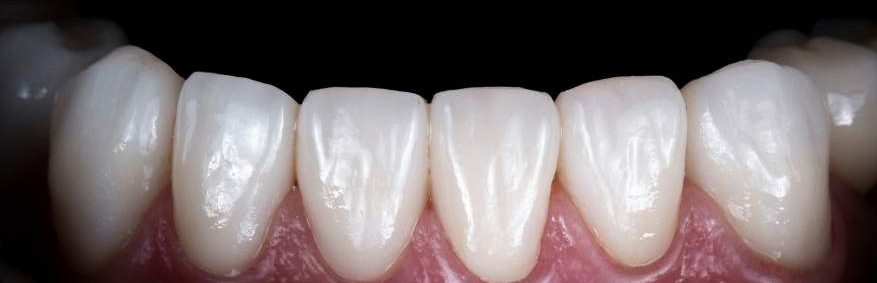
Veneers are thin restorations placed on the front surfaces of teeth to modify their color, shape, proportions, or apparent spacing. They may be considered when teeth are already well positioned but are unusually small, unevenly shaped, worn, or discolored.
A veneer can make adjacent teeth look wider so that a gap appears closed, but it does not correct the underlying tooth positions or bite. If the space is large, simply enlarging the teeth may create proportions that look unnatural or make cleaning more difficult. In those situations, Orthodontic treatment before veneers may produce a more balanced result.
Composite Veneers
Composite resin can be shaped directly on the tooth or fabricated as a restoration. It can be a relatively conservative way to improve proportions and close a small space, sometimes in a single appointment. Composite can stain, chip, or wear over time, and repairs or replacement may be needed.
Porcelain Veneers
Porcelain veneers are laboratory-fabricated ceramic restorations that can provide durable, natural-looking changes in tooth color and shape. They generally cost more than composite restorations, and many cases require permanent removal of some enamel. Veneers are not automatically preferable for wider gaps or heavy biting forces; tooth proportions, bite, remaining enamel, and habits such as grinding affect their suitability.
Dental Bonding for Small Spaces
With direct dental bonding, a dentist applies tooth-colored composite resin to reshape one or more teeth. Bonding may be an excellent option for a small gap associated with undersized or irregularly shaped teeth, especially when the bite is already satisfactory.
Bonding generally involves less tooth preparation than traditional porcelain veneers, although the exact approach depends on the case. Like composite veneers, bonded resin may require maintenance or repair. Your dentist can help determine whether bonding alone is sufficient or whether orthodontics should come first.
Which Treatment Is Best for My Tooth Gap?
There is no universal winner between braces, clear aligners, bonding, and veneers. The best choice depends on the cause of the gap and your treatment goals:
- Tooth-position or bite problem: orthodontic treatment is often the most appropriate starting point.
- Small or unusually shaped teeth with otherwise acceptable alignment: bonding or veneers may improve tooth proportions.
- Spacing plus tooth-shape concerns: orthodontics followed by selective restorative treatment may be recommended.
- New or widening spaces, bleeding gums, or loose teeth: a periodontal evaluation is important before cosmetic closure.

Frequently Asked Questions About Closing Tooth Gaps
Can Invisalign close a gap between my front teeth?
Yes, clear aligners can close many types of spaces, but suitability depends on the bite, tooth roots, size of the gap, and overall treatment goals. Some cases benefit more from braces or a combination of approaches.
Are veneers faster than braces?
Restorative treatment can sometimes change the appearance of a gap in fewer visits than orthodontics. However, veneers and bonding do not physically move the teeth or correct an underlying bite problem. Choosing solely by speed can lead to an unsatisfactory result.
Can a gap reopen after braces?
Yes. Teeth can shift, and spaces may reopen if retention is inadequate or the underlying factors are not addressed. Your orthodontist will recommend the appropriate long-term retainers and follow-up.
Do all gaps need to be closed?
No. A stable gap may be healthy and purely an aesthetic preference. Treatment is more important when spacing is associated with periodontal disease, tooth migration, a bite problem, or other oral health concerns.
Get a Personalized Orthodontic Evaluation
If you’re deciding between orthodontic treatment and cosmetic dentistry, start with a diagnosis rather than choosing a procedure based on appearance alone. Dr. Emilia Taneva, DDS, MS, a board-certified Chicago orthodontist, can assess tooth positioning, spacing, and bite relationships and explain whether braces, clear aligners, or coordination with a restorative dentist would best meet your goals.
Schedule an orthodontic consultation at one of our five Chicagoland locations to discuss your options.
Continue Exploring Your Smile Options
Explore these related guides to understand braces, clear aligners, bite problems, and long-term results.
Find an Orthodontist Near You
Dr. Emilia Taneva, a board-certified Chicago orthodontist, provides personalized braces, Invisalign, and clear aligner treatment for children, teens, and adults at five convenient locations throughout Chicago and the southwest suburbs.